My attempt here is to clear up the myth regarding the colour of foundation and powder. These are two of the most important elements in makeup application that should NEVER be compromised.
How do you choose the right colour? Learn your skin undertone, do you fall into the red (cool) or yellow (warm) tones, are you in the light to medium or medium to dark tones or very dark. This information is especially vital when selecting your powder.
Powders are either colourless, translucent or pressed. The colourless powder is as it says no colour it works better on the lighter to medium and some dark skin tones, however I don’t recommend for the very dark skin tones as it has a tendency to finish ashy.
Translucent powders are usually sheer in texture which covers a wider range of skin colour in the light to medium, medium to dark skin tones. The colour varies depending upon the manufacturer.
Pressed powder usually contains more pigment than the translucent but one should bear in mind that this can significantly impact the outcome of the finish when using with a foundation. There are some pressed powders that are also colourless. The one thing to be conscious of is your powder should never change the colour of your foundation.
So your powder SHOULD NOT be 2 shades lighter as this could cause your finish to look ashy in the end especially in your photographs.
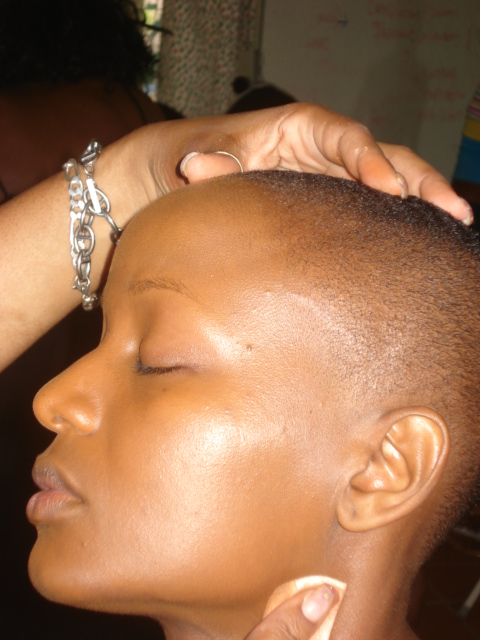
The right foundation should be tested alongside your jawline, the colour should blend into your skin for a natural finish. It might be necessary to use a colour that is a tone darker around your forehead and along the jawline because some folks tend to be darker around those areas. The forehead is the area that gets more exposure to the sun and the neck area is darker on some women. This strikes a more natural balance so when photographed there is no distinct different between the colour of your face and your neck and shoulders.
 Refresh, Rejuvenate, Exhale, Reprogram
2 responses to “WHAT’S THE DEAL WITH COLOUR?”
with respect to using different shades to match different areas of the face, would you suggest using 2 different brands. For instance using brand A for the lighter areas and brand B for the darker (given that both are suited to the skin type).???
Oh yes Rhea, I do that all the time…